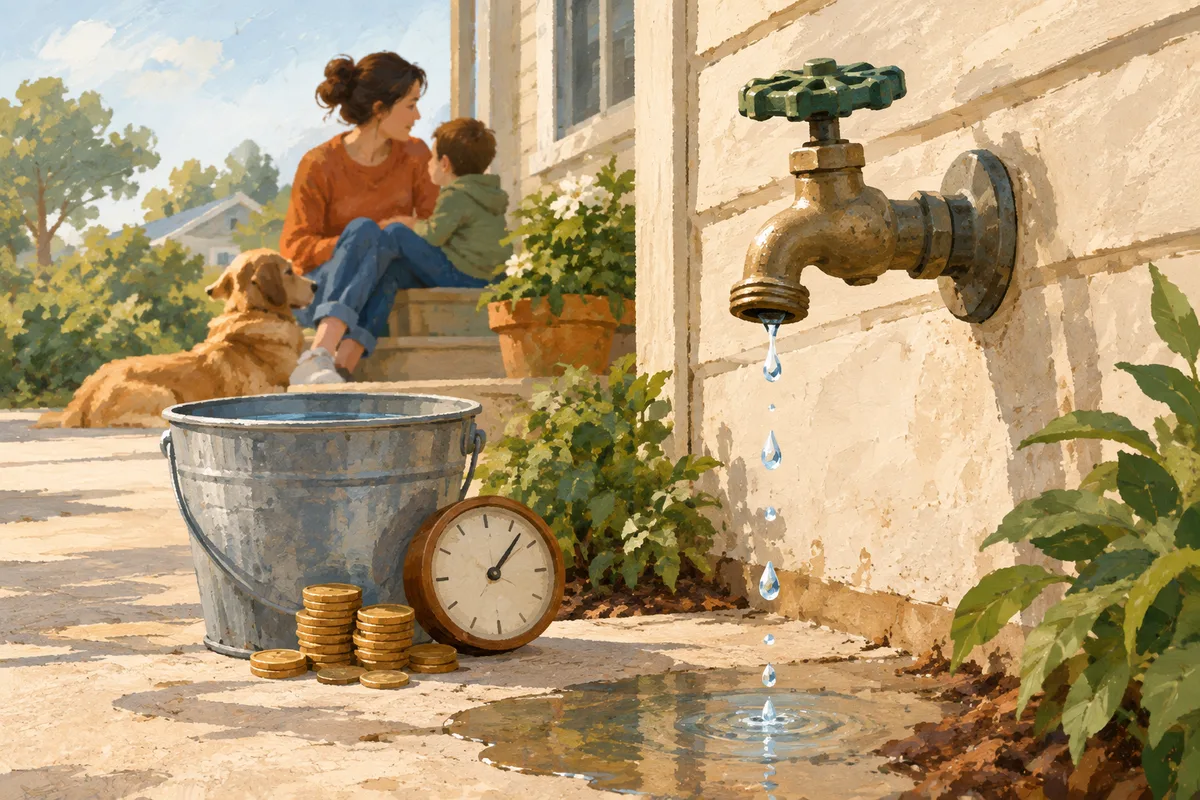
What a Dripping Faucet Really Wastes
A faucet that drips once every few seconds seems like nothing to worry about. It is quiet, it is small, and it is easy to walk past a hundred times a day without giving it a second thought. But that steady little sound is actually a sign of ongoing wear happening inside your plumbing, and it rarely fixes itself.
Most homeowners in Wheat Ridge who call us about a drip have been living with it for weeks or months. By the time they reach out, the drip has usually picked up speed, or a stain has formed in the sink, or the handle feels stiffer than it used to. None of that happens overnight. It builds slowly, which is exactly why it is easy to ignore.
This article looks at why a drip tends to get worse instead of staying the same, where that water actually goes, and what it can mean for the fixtures and pipes around it.
Why a Small Drip Rarely Stays Small
Inside most faucets, a rubber or silicone washer presses against a metal seat to shut off the flow of water. Every time you turn the handle, that washer gets compressed and released. Over time, it flattens out, cracks, or picks up small grooves from mineral build-up in the water. Once that seal is no longer tight, water finds its way through, even when the faucet is fully off.
The tricky part is that this wear speeds up once it starts. A slightly worn washer lets a little water through, and that constant flow wears the seat and washer down faster than normal use would. What starts as an occasional drip after you use the sink can turn into a slow, steady trickle that never fully stops.
Water pressure plays a role too. Homes with higher household pressure tend to push a worn seal harder, which can turn a barely noticeable drip into something you hear across the room within a matter of weeks.
Where That Water Actually Goes
It is easy to underestimate how much water a drip lets through because each individual drop feels insignificant. But a faucet that drips through the night, through work hours, and through every quiet moment in between is running for a lot more of the day than most people realize. Add that up over a full billing cycle, and it shows up as a noticeable bump on your water usage.
This is especially true for a leaking hot water tap, since that water has already been heated. In that case, you are not just losing water, you are also paying to warm water that goes straight down the drain without ever being used. If a hot side drip has been going on for a while and your water heater is also running longer or louder than usual, it may be worth having both checked at the same time.
What Constant Dripping Does to Fixtures
A steady drip does more than waste water. It also puts continuous, low-level stress on the parts around it. Sinks and tubs can develop mineral staining where water repeatedly lands, especially in areas with harder water. That build-up can be difficult to remove once it sets in, and it tends to dull the finish underneath.
Inside the faucet itself, the constant flow keeps wearing at the seat and internal parts long after the original washer has failed. What might have been a simple part replacement early on can turn into a job that involves more of the faucet assembly if it is left unaddressed for too long.
Cabinets and countertops near a leaking faucet can also take on moisture over time, which is worth keeping an eye on if you notice any softness, discoloration, or a musty smell nearby.
When a Drip Points to Something Bigger
Most drips are a straightforward fix once someone gets eyes on them. But every so often, a drip is a visible clue pointing to a less visible issue, like unusually high water pressure throughout the home or a small leak elsewhere in the supply line that is affecting pressure at that fixture. If you have more than one faucet dripping around the same time, or you notice damp spots, warped flooring, or a higher water bill without a clear reason, it may be worth having a proper leak detection check done rather than replacing parts one fixture at a time.
Slow drainage or gurgling sounds paired with a drip can sometimes point toward separate issues in the drain line rather than the faucet itself, which is a good reason to mention everything you have noticed when you call, even details that seem unrelated.
What to Do From Here
If you have a faucet dripping at home, it is worth having it looked at sooner rather than later, both for the sake of your water usage and the health of the fixture itself. A quick fix now is almost always simpler than dealing with a worn valve, a stained sink, or water damage down the line.
If you are in Wheat Ridge and want a second opinion on a drip, a strange sound in your pipes, or anything else going on with your plumbing, give Ridgeline Plumbing & Drain a call. We are happy to talk through what you are noticing and help you figure out the right next step for your home.
Questions about your own situation? The team at Ridgeline Plumbing & Drain is happy to help — call us at (720) 555-0117 or request an appointment.
This article is for general information only.