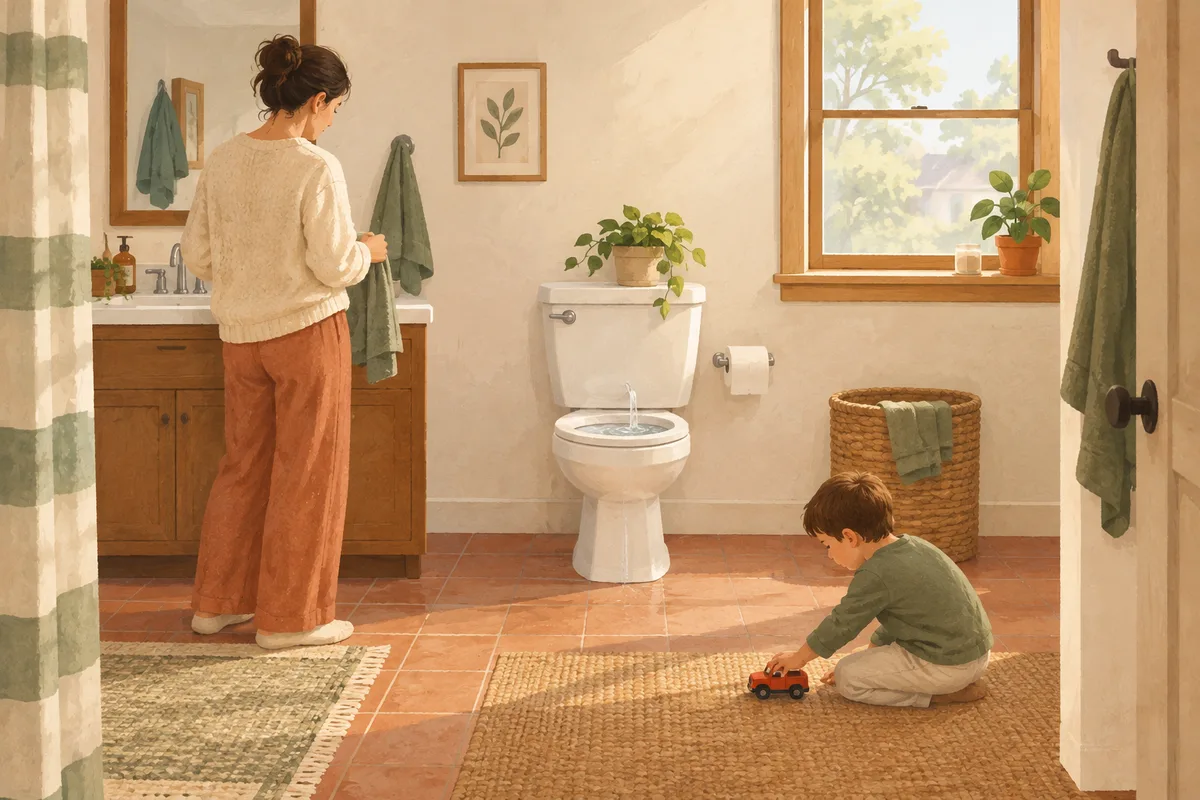
The Running Toilet: Small Sound, Real Waste
That soft hiss or trickle coming from the bathroom after you flush isn't just background noise. It's water leaving your home and heading straight to the sewer without ever being used for anything. A running toilet is one of the most common household plumbing issues, and it's also one of the easiest to fix once you understand what's actually happening inside the tank.
Most people ignore the sound because the toilet still works fine. You flush, it fills back up, life goes on. But that constant refill cycle adds up quietly in the background, day after day, until it shows up somewhere you notice it more, like your water usage.
What's Happening Inside the Tank
Lift the lid off your toilet tank and you'll find a fairly simple system. There's a fill valve that lets water in after a flush, a float that tells the fill valve when to stop, and a flapper that seals the bottom of the tank so water doesn't drain into the bowl until you flush again.
A running toilet almost always means one of these three parts isn't doing its job. The flapper might not be sealing all the way, letting water slowly leak past it into the bowl. The float might be set too high, so water keeps overflowing into the overflow tube. Or the fill valve itself might be worn out and not shutting off completely.
Over time, the flapper is usually the culprit. It's made of rubber or a rubber-like material, and that material can warp, crack, or collect build-up on the edges that keep it from making a tight seal. Once it can't seal properly, water keeps sneaking through even though everything looks normal from the outside.
Simple Checks You Can Try
Before assuming the worst, there are a few things worth checking yourself. Take the lid off the tank and watch what happens after a flush. If water keeps trickling into the overflow tube even after the tank should be full, the float is likely set too high and needs adjusting.
You can also do a simple dye test. Add a few drops of food coloring to the tank water and wait a while without flushing. If color shows up in the bowl, water is leaking past the flapper. This tells you where the problem lives without needing to take anything apart.
Sometimes a flapper just needs to be repositioned or the chain connecting it to the flush handle needs adjusting so it seats properly. Other times, the flapper has simply aged out and needs to be replaced with a new one that matches your toilet model.
When It's More Than a Flapper
Most running toilets come down to that small handful of parts, and many homeowners can handle a flapper swap without much trouble. But not every running toilet is that straightforward. If you've replaced the flapper and adjusted the float and the sound keeps coming back, something else may be going on.
A fill valve that's aging out can cause similar symptoms and may need full replacement rather than adjustment. In older homes, mineral build-up inside the valve or along the tank walls can also interfere with a proper seal, even with new parts installed.
If the toilet is rocking slightly, if water is pooling around the base, or if the running sound comes and goes at odd times, it's worth having someone take a closer look. Those signs can point to issues beyond the tank itself.
When Running Might Signal Something Bigger
In most homes, a running toilet is a small, contained issue. But plumbing systems are connected, and sometimes a symptom in one fixture points to pressure or flow issues elsewhere in the house. If you're noticing running toilets alongside slow drains, unusual sounds in your pipes, or water pressure that feels off in other rooms, it may be worth having your system checked more broadly.
This is especially true if you've addressed the tank parts and the sound persists, or if your water usage has crept up without a clear reason. Leak detection can help pinpoint whether the issue is isolated to the toilet or connected to something happening further along your plumbing lines.
You know your home better than anyone, and a little curiosity now can save you from bigger surprises later. If something feels off, or you've tried the simple fixes and the toilet still won't settle down, give Ridgeline Plumbing & Drain a call. We're happy to talk through what you're noticing and help you figure out the next step, whether that's a quick part swap or a closer look at your home's water system.
Questions about your own situation? The team at Ridgeline Plumbing & Drain is happy to help — call us at (720) 555-0117 or request an appointment.
This article is for general information only.