Sump Pumps: What They Do and When to Check Yours
If your home has a basement or crawl space, there is a good chance you have a sump pump tucked away in a corner, quietly doing its job without much thought from anyone. Most homeowners only start paying attention to this small machine when something goes wrong, and by then water may already be where it shouldn't be.
A sump pump is one of those unglamorous pieces of equipment that works hard behind the scenes to keep your lower level dry. Understanding how it works, and knowing a simple way to check it, can save you a lot of stress down the road.
What a Sump Pump Actually Does
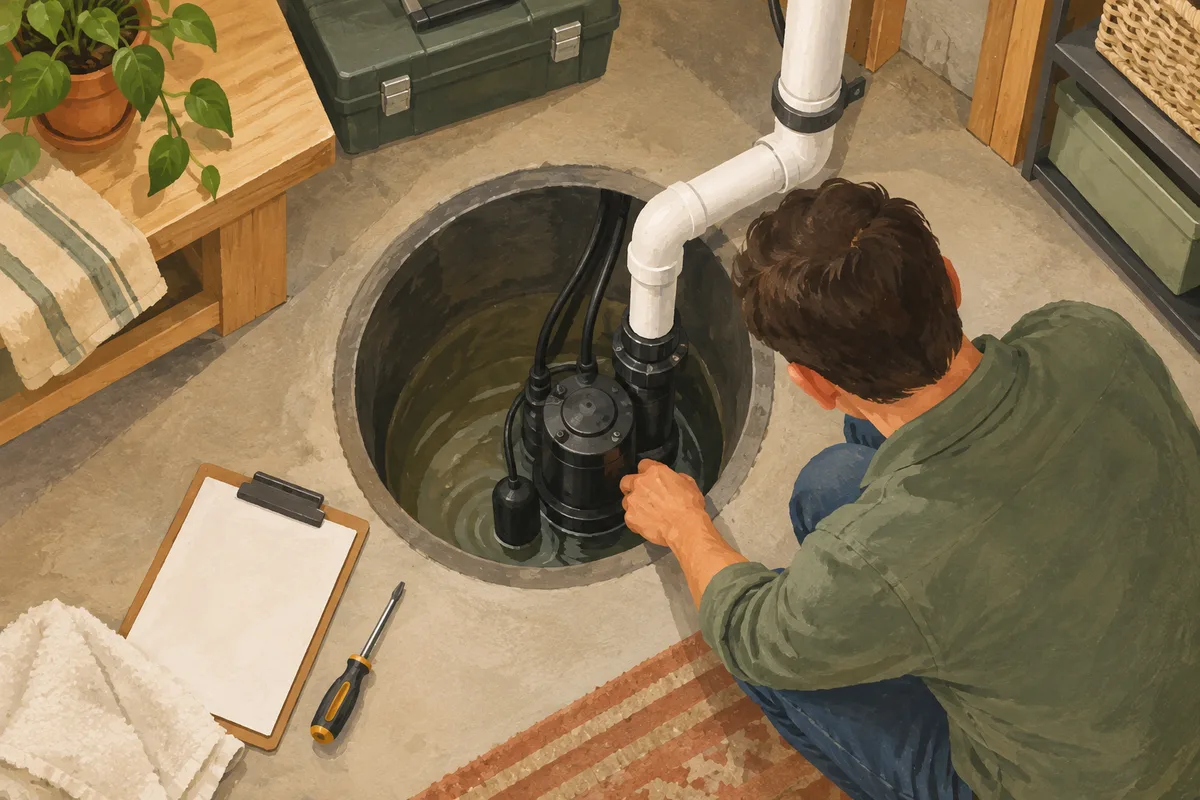
A sump pump sits in a small pit, often called a sump basin, that is usually the lowest point in a basement or crawl space. Groundwater and rain runoff naturally travel toward this low point through gravity and drainage systems built into the foundation.
When water collects in the basin and rises to a certain level, a float switch inside the pump triggers it to turn on. The pump then pushes the water through a pipe that leads away from your home, usually out to the yard or a storm drain, keeping the water from building up against your foundation walls or seeping into your basement floor.
Without this system working properly, homes in areas with heavy rain, melting snow, or a high water table can end up with damp carpets, warped flooring, or worse. The pump is a small part of your home, but it plays a big role in keeping your foundation and belongings safe from water damage.
Signs Your Sump Pump Needs Attention
Sump pumps do not usually fail without warning. There are often small clues that something needs a closer look. A pump that runs constantly, even when it has not rained recently, may be struggling with a stuck float switch or a motor that is wearing down.
On the flip side, a pump that never seems to turn on, even during wet weather, could mean the switch is not making contact or the unit has lost power. Odd noises, like grinding or rattling, are also worth paying attention to, since they can point to debris caught in the pump or a part that is loosening over time.
If you notice a musty smell in your basement or see moisture along the walls or floor, it is worth checking the sump pump area even if the pump seems to be running. Sometimes the issue is with the drainage pipe or basin rather than the pump itself.
A Simple Test You Can Do at Home
You do not need any special tools to check whether your sump pump is working the way it should. Start by locating the pump and making sure it is plugged in and the outlet has power. A quick way to test this is to plug in a small lamp or phone charger to confirm the outlet works.
Next, slowly pour a bucket of water into the sump basin until the water level rises enough to lift the float switch. The pump should kick on within a few seconds, begin pumping water out, and then shut off once the water level drops back down. If it starts right away and shuts off cleanly, that is a good sign the basic mechanics are working.
While you are at it, take a look at the discharge pipe outside your home to make sure it is not blocked by leaves, dirt, or ice. A clear path for the water to exit is just as important as the pump itself. Doing this simple check twice a year, such as in the spring and fall, is an easy habit that takes only a few minutes.
Why Timing Matters in Wheat Ridge
Here in Wheat Ridge, our weather swings quite a bit throughout the year. Heavy spring snowmelt and sudden summer storms can send a lot of water toward foundations in a short amount of time, while freezing temperatures in winter can affect outdoor discharge pipes and drainage lines.
Checking your sump pump before the wetter months of spring gives you time to notice any build-up or wear before it becomes a bigger problem. A quick check again in the fall helps make sure everything is ready before winter moisture and ice become a factor.
When to Call a Professional
If your sump pump does not respond during your test, sounds unusual, or you notice water pooling in areas it should not be, it is a good idea to have someone take a closer look. Sometimes the fix is minor, like clearing debris from the basin or discharge line. Other times it may point to a bigger issue with drainage around your foundation.
At Ridgeline Plumbing & Drain, we work with homeowners throughout Wheat Ridge on drain cleaning, leak detection, and other plumbing concerns that often connect to basement moisture issues. If you have questions about your sump pump, your drainage system, or anything else going on in your home's plumbing, feel free to give us a call. We are happy to talk through what you are seeing and help you figure out the next step.
Questions about your own situation? The team at Ridgeline Plumbing & Drain is happy to help — call us at (720) 555-0117 or request an appointment.
This article is for general information only.