Hard Water: How to Spot It and What It Does
If you have ever noticed white spots on your glassware, a dull film on your shower doors, or towels that feel stiffer than they used to, you have probably met hard water. It is one of the most common water quality issues in homes around Wheat Ridge and across Colorado, and while it is not usually a health concern, it can be a real nuisance for your fixtures, appliances, and plumbing.
Understanding what hard water is and how to recognize it can help you decide whether it is worth addressing in your home. Below, we walk through the basics, the telltale signs, and the general options homeowners have for dealing with it.
What Makes Water 'Hard'
Hard water simply means water that carries a higher amount of dissolved minerals, mainly calcium and magnesium, picked up as it travels through soil and rock before reaching your home. Colorado's geology tends to produce water on the harder side compared to some other parts of the country, which is why the topic comes up so often for homeowners here.
These minerals are not harmful to drink, but they do not stay dissolved forever. As water heats up or evaporates, the minerals separate out and cling to surfaces, forming the crusty, chalky deposits many people call scale or build-up. Over time, that build-up shows up in places you would rather not deal with.
Signs You Might Have Hard Water
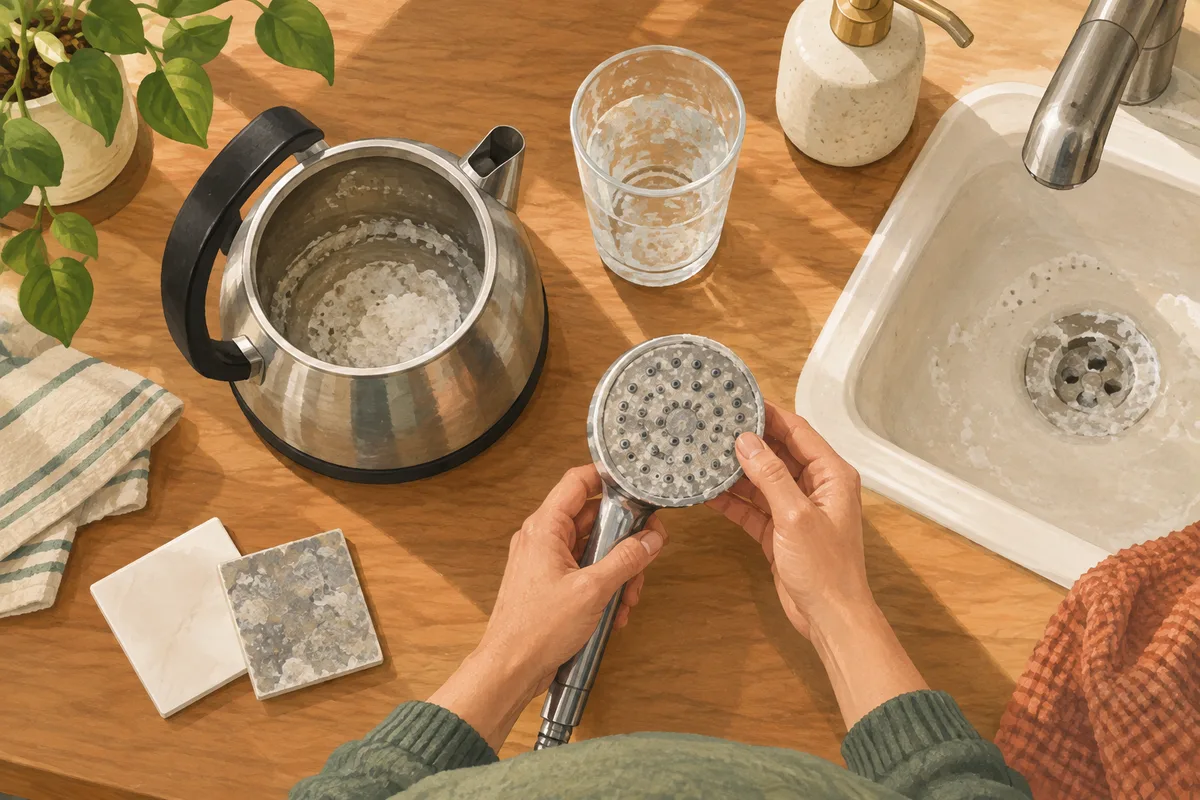
The most familiar sign is spotting on dishes and glassware, even right out of the dishwasher. You might also notice a cloudy or chalky film on shower doors, faucets, and tile that seems to come back no matter how often you clean it.
Laundry can be another clue. Hard water can leave towels and clothes feeling stiff or rough, and it can make soap and detergent less effective at rinsing clean, which sometimes leads to a dingy look over time. Some homeowners also notice their skin or hair feels different after showering, or that soap does not lather the way it used to.
Inside your plumbing, hard water build-up is less visible but still active. It can coat the inside of pipes and fixtures, narrow the openings on faucet aerators and showerheads, and collect inside water heaters, where it settles at the bottom of the tank.
What Hard Water Does to Your Home Over Time
The mineral build-up from hard water tends to accumulate slowly, so it is easy to overlook until it starts causing bigger headaches. Inside a water heater, mineral deposits can settle at the bottom of the tank and make the unit work harder to heat the same amount of water. This added strain is a common reason homeowners eventually need water heater repair sooner than expected.
Hard water build-up can also narrow pipes and fixtures over the years, which sometimes contributes to slow drains or reduced water flow. If you have ever needed drain cleaning for a shower or sink that drains slower than it used to, mineral build-up could be part of the story, especially alongside soap residue and hair.
In some homes, long-term scale build-up inside pipes and fittings can create weak points or add pressure to aging plumbing, which is one more reason routine leak detection can be a good habit, particularly in older homes where pipes have had years to accumulate deposits.
Options for Dealing With Hard Water
The right approach depends on how hard your water is and how much it is bothering you. Some homeowners choose to install a water softening or conditioning system, which treats water before it reaches your fixtures and appliances. Others prefer smaller fixes, like using cleaning products designed to cut through mineral film or replacing showerheads and aerators when they become clogged.
Regular maintenance also goes a long way. Flushing a water heater periodically can help clear out settled minerals before they cause bigger problems, and keeping an eye on slow drains or unusual water flow can catch build-up before it turns into something more serious, like a hidden leak.
There is no single right answer for every home, since water hardness and household habits vary quite a bit. If you are not sure how hard your water actually is or which option makes the most sense for your situation, that is a great question to bring up with a professional who can take a look at your specific plumbing.
When to Call a Plumber
Hard water on its own is usually more of an annoyance than an emergency, but the effects it leaves behind are worth paying attention to. If your water heater seems to be working harder than it should, if a drain has slowed down over time, or if you suspect a leak forming in older pipes, these are all good reasons to reach out.
Every home's plumbing and water quality is a little different, so if you have questions about the spots, scale, or stiff laundry you are noticing, feel free to give us a call. We are happy to talk through what you are seeing and help you figure out the next step for your home in Wheat Ridge.
Questions about your own situation? The team at Ridgeline Plumbing & Drain is happy to help — call us at (720) 555-0117 or request an appointment.
This article is for general information only.