Habits That Keep Drains Clog-Free
Most of the clogged drain calls we take at Ridgeline Plumbing & Drain in Wheat Ridge didn't start with one dramatic mistake. They started months earlier, with small things going down the drain that never should have. Grease that cooled and hardened. Hair that caught on a rough spot in the pipe. Wipes that said flushable on the package but didn't behave that way once they were out of sight.
The good news is that drains are pretty forgiving when you treat them well. A few household habits, practiced without much effort, prevent a large share of the slow sinks and backed-up tubs people deal with every year.
Here's a plain look at what belongs in each drain, what absolutely doesn't, and the gentle upkeep that keeps water moving the way it should.
The Kitchen Sink Sees the Most Trouble
Kitchen drains handle the messiest jobs in the house, and grease is their biggest enemy. Bacon fat, pan drippings, butter, and oil all pour like a liquid and then cool into a waxy coating on the inside of your pipes. Over time that coating narrows the passage and grabs onto everything else that floats by.
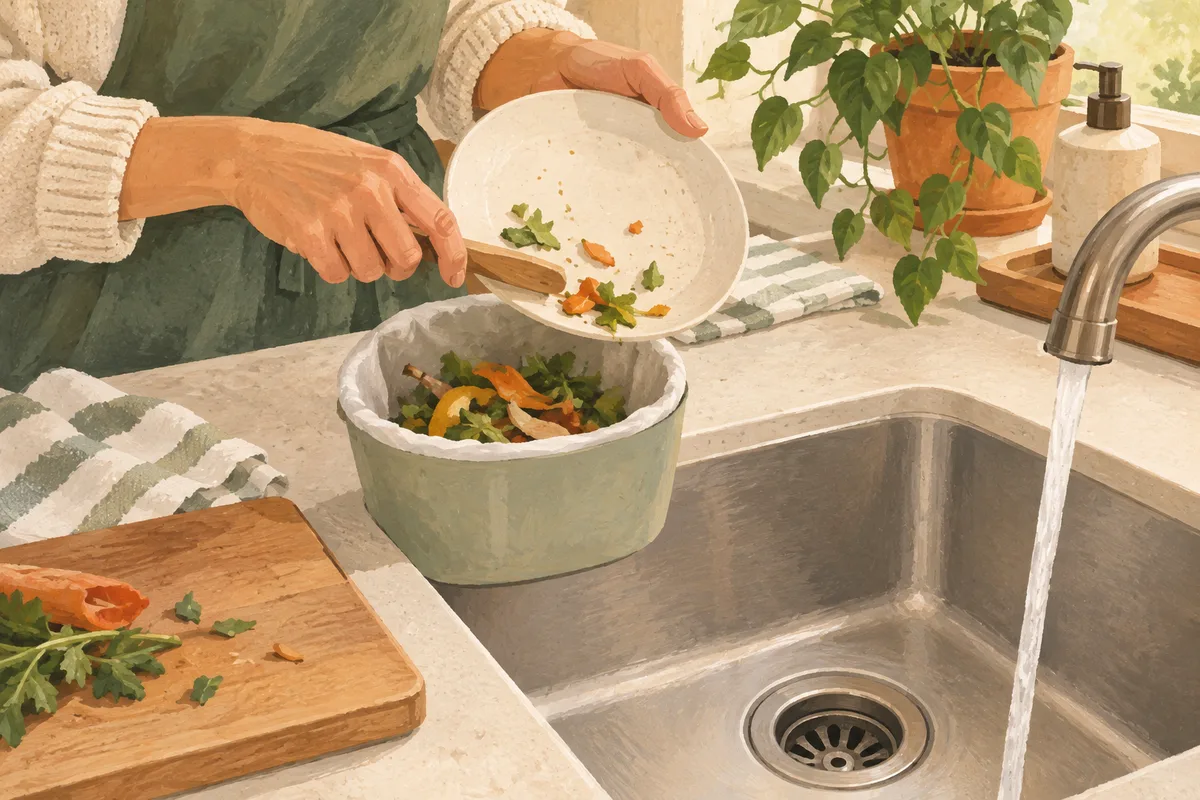
Keep an old can or jar under the sink. Pour cooled grease into it, let it harden, and throw it in the trash. Wipe greasy pans with a paper towel before they hit the sink. This one habit does more for a kitchen drain than anything else you can do.
Garbage disposals also get more credit than they deserve. They chop food, but they don't make it disappear, and some foods cause real problems. Coffee grounds settle into a sludge. Rice and pasta swell. Potato peels turn into paste. Celery, corn husks, and onion skins are stringy enough to wrap around the blades. Scrape plates into the trash or compost first and use the disposal for the little bits left behind. Run cold water while it works and for a few seconds after.
Bathroom Drains and the Hair Problem
Tub and shower drains clog for one main reason: hair mixes with soap residue and forms a mat that water can't get past. A cheap mesh strainer or hair catcher over the drain stops most of it before it ever gets in. Empty it into the trash after each shower and you've solved the problem before it becomes one.
Bathroom sinks collect their own mix of shaving stubble, toothpaste, and cosmetics. Once a week, pull the stopper if yours lifts out and clear away anything clinging to it.
The toilet deserves its own rule, and it's a short one. Human waste and toilet paper only. Wipes, cotton swabs, paper towels, tissues, cat litter, and feminine products don't break down in water the way toilet paper does. They travel a short distance, snag on something, and start collecting everything behind them. Many of the serious backups we see in older Wheat Ridge homes trace back to items that seemed harmless at the time.
Laundry, Utility, and Floor Drains
Washing machines send out lint, sand, and fibers with every load. A lint trap on the discharge hose catches a surprising amount and costs almost nothing to replace when it fills up.
Utility sinks in basements and garages often take paint, joint compound, plaster, and mop water full of grit. These settle out and harden in the trap. Rinse tools outside when you can, and let heavy sediment settle in a bucket so you can toss the solids rather than pour them down.
Floor drains in basements and laundry rooms have traps that can dry out if nothing runs into them for months. When that happens, sewer odors drift up into the house. Pour a bucket of water into unused drains every couple of months to keep the seal full.
Gentle Maintenance That Works
You don't need harsh chemicals. Store-bought drain openers rely on heat and caustic ingredients that can damage older pipes, and they often just bore a small hole through a blockage that reforms within weeks. If the clog doesn't clear, those chemicals are still sitting in the pipe when someone opens it up.
Instead, run hot tap water down the kitchen drain for a minute after washing dishes to help carry residue further along. Once a month, fill the sink with hot water and let it all drain at once so the volume gives the line a good rinse. A simple plunger, used on a sink or tub with the overflow opening covered, clears many early slowdowns.
Pay attention to warning signs too. Gurgling, a lingering smell, water that pools around your feet in the shower, or more than one fixture draining slowly at the same time can point to something deeper in the line rather than a simple surface clog.
When It's Time to Ask for Help
If a drain keeps slowing down after you've cleared it, or if several fixtures act up together, the issue may be further out in the sewer line where household tools can't reach. Tree roots, settling pipe, and old build-up are common causes in established neighborhoods.
Ridgeline Plumbing & Drain offers drain cleaning, sewer line repair, leak detection, and water heater repair for Wheat Ridge homeowners. If you're not sure whether what you're seeing is a small annoyance or something worth looking at now, give us a call and describe it. We're glad to talk through your situation and help you figure out the next step.
Questions about your own situation? The team at Ridgeline Plumbing & Drain is happy to help — call us at (720) 555-0117 or request an appointment.
This article is for general information only.